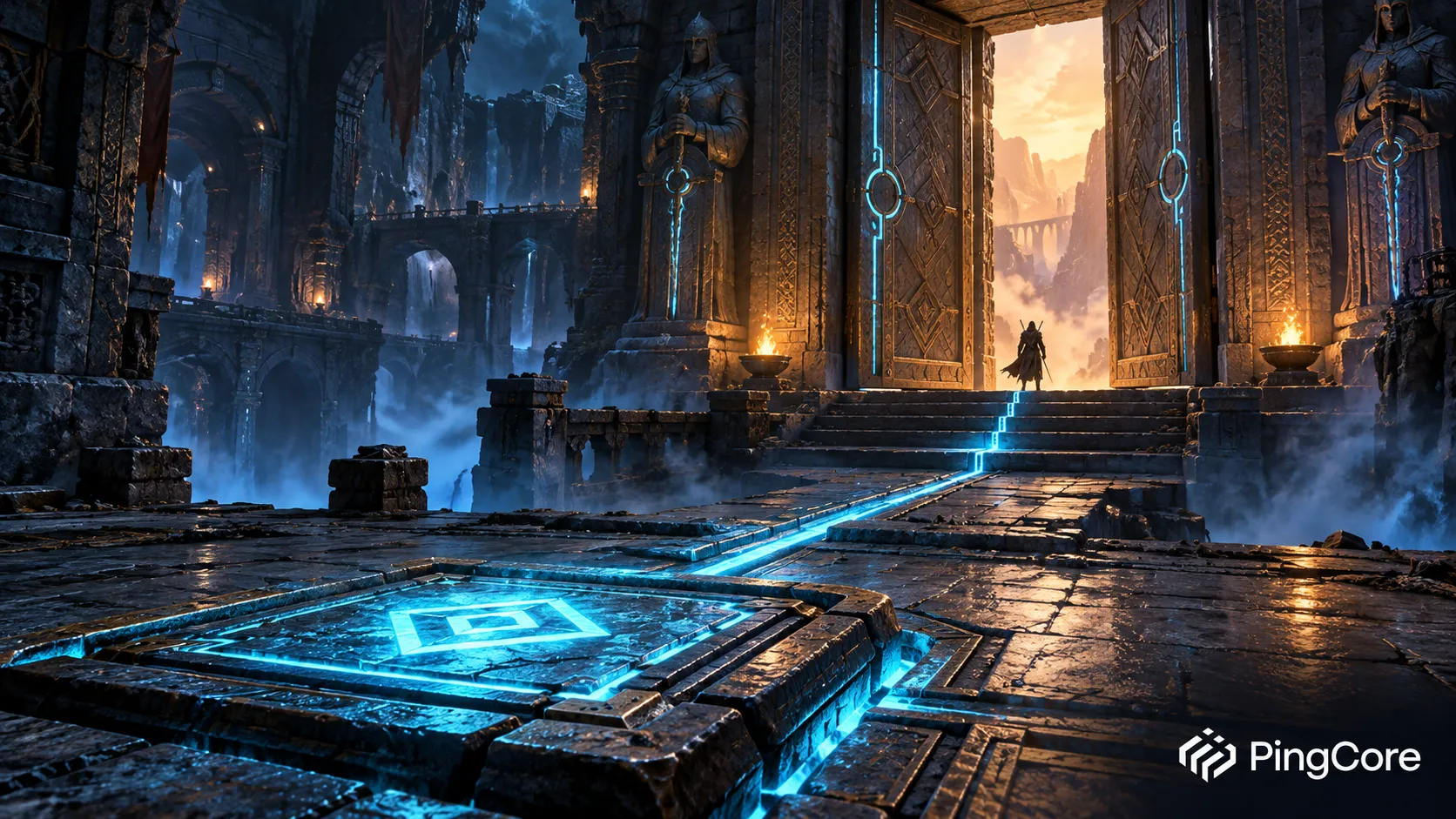
Hytale Chapter I: Growing a Game Without Leaving Existing Worlds Behind
Hytale’s first chapter welcomes existing Exploration Mode saves. We explore why that continuity matters and what studios can learn about updating persistent worlds.
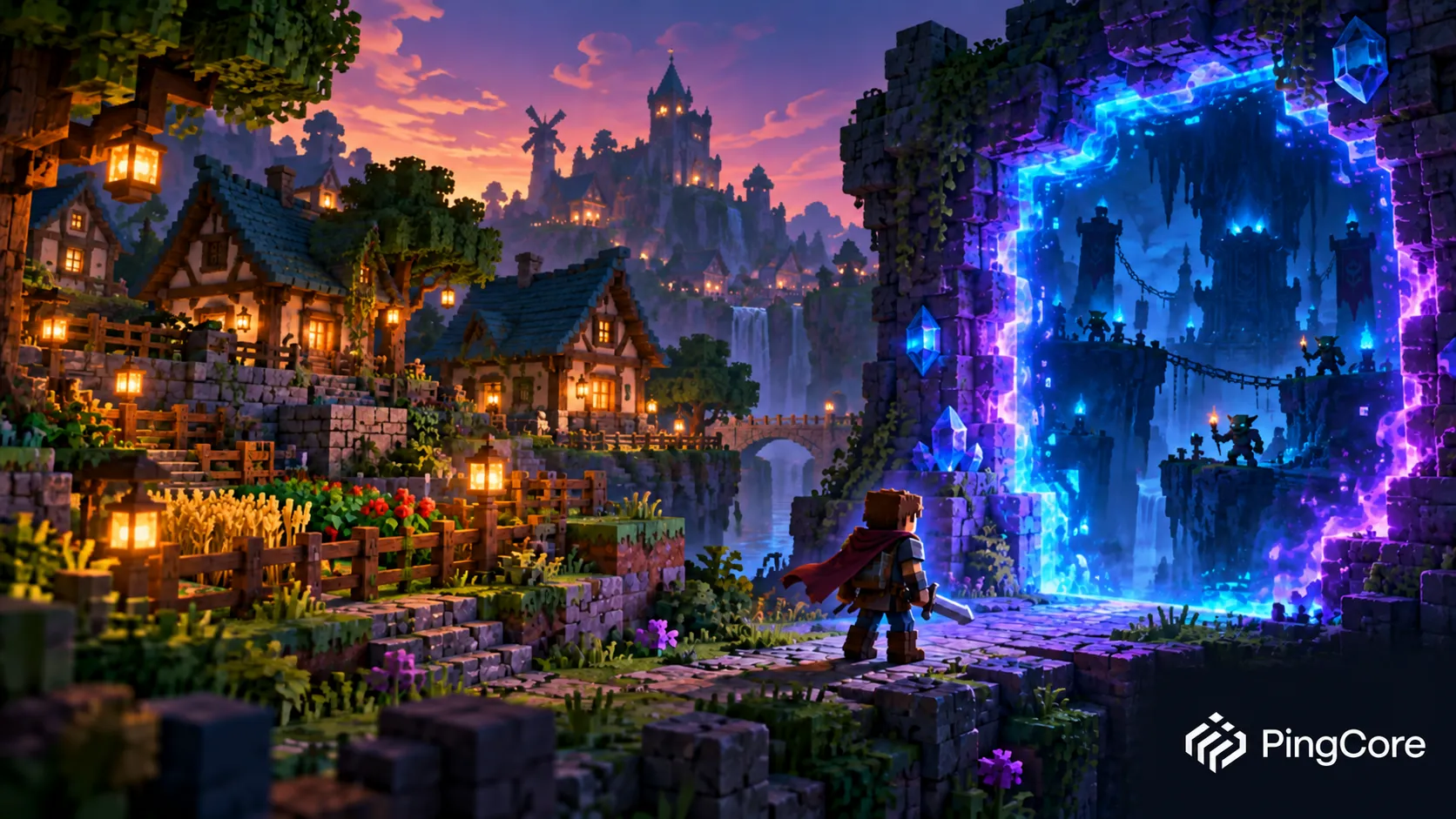
Hytale’s first chapter gives players new places to explore while keeping their existing worlds relevant. For a game built around exploration and creation, that continuity matters: the next adventure can begin without abandoning the place players already call home.
Chapter I: Out of the Breach launched on 12 October. Hytale’s team says players can begin its content from an existing Exploration Mode save or a new world, starting at the Forgotten Temple and its Goblin Lab.
At PingCore, that combination catches our attention. New content creates a reason to return. Preserving an established world gives returning players something worth coming back to.
An expansion with room to grow
The chapter introduces the Goblin Breach, a temporary portal into a space that regenerates on entry. Players work against a time limit while exploring, fighting and collecting what they need. New abilities and Hytale’s first handcrafted dungeon add further reasons to investigate.
The announcement also describes the breach area as something the team can keep adding to. That is an appealing direction for a persistent game: familiar surroundings can become a starting point for fresh experiences.
For studios, the broader question is how to deliver that growth while protecting the work already stored in players’ saves. New quests and systems have to meet worlds that have developed in different ways.
Test the worlds players actually have
A new save gives a development team a clean starting point. Established saves provide a different test. Players may have built extensively, collected unusual combinations of items or stopped playing at very different stages.
Studios should keep representative older saves in their release testing. Check how new objectives appear, whether players understand where to begin and whether earlier progress still behaves as expected.
For server operators, testing on a separate copy of a world can reveal problems before a community’s main save is affected. Preserve the original files and note the game version associated with each backup. Check supported recovery options before attempting to move an updated save back to an older build.
These are general release practices, not claims about Hytale’s internal process or a guarantee that every customised server will update identically.
Tell returning players where to start
Hytale’s announcement gives players a concrete destination and describes a Chapter screen that organises objectives. That is useful communication: players can connect a large update with a clear next action.
Server communities benefit from the same clarity. Explain when an update will happen, how long access may be interrupted and what players should do when they return. If a server uses mods, distinguish the base game’s support for existing worlds from the compatibility of that particular mod collection.
Avoid promising that every change will be invisible. Clear instructions give players a better chance of reaching the new content with the right expectations.
Watch the updated world in use
Getting the server running is the beginning of the check. Confirm that players can find it, join, access their progress and reach the new content together.
Observe responsiveness and resource use during real sessions, including periods when players explore different areas. Compare those observations with the server’s earlier behaviour before making capacity decisions.
A useful review combines technical records with player reports. A server can be online while a returning player still cannot work out how to continue.
Progress should have somewhere to live
Hytale Chapter I offers a timely example of an update designed to reach existing worlds. We are excited to see how players carry their own histories into its next adventures.
For PingCore, dependable multiplayer infrastructure supports that continuity. Studios need room to grow their games, and players need confidence that their time still counts. Explore PingCore to discuss the infrastructure behind your next chapter.